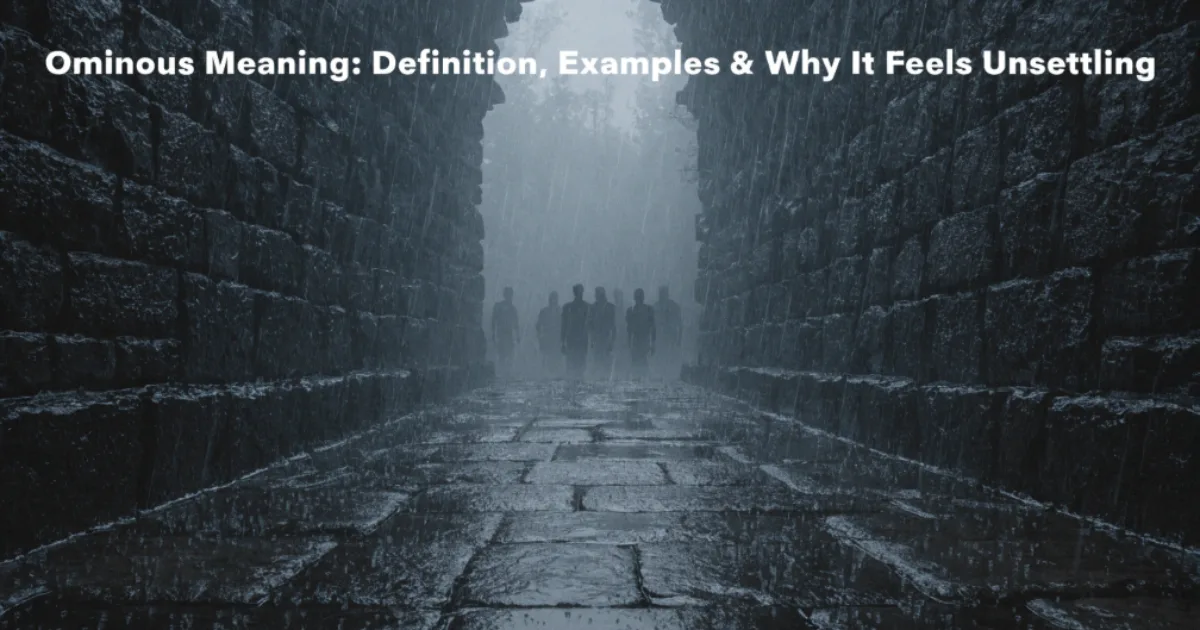
Ominous means something that feels threatening, dark, or like a warning that something bad is about to happen. It describes a mood, sign, or situation that makes you uneasy — even if you can’t explain exactly why.
Think of those thick, black storm clouds rolling in right before a tornado. That’s ominous.
More posts:Carino Meaning: Spanish & Italian Word for Affection
What Is the Ominous Definition and Why Does This Word Feel So Unsettling?
The word ominous is an adjective.
It describes anything that gives off a strong sense of danger or doom — without that danger fully arriving yet.
That’s what makes it so powerful. It’s the feeling before the bad thing happens.
- It signals a warning
- It creates suspense
- It builds dread without certainty
For example, a doctor saying “these results are ominous” doesn’t mean you’re dying — it means something worrying has shown up that deserves serious attention.
The Origin and Etymology of Ominous — Where Did This Dark Word Come From?
The word traces back to Latin — specifically ominosus, meaning “full of omens.”
And omen itself meant a prophetic sign — good or bad.
Interestingly, omens weren’t always negative in ancient Rome. But over centuries, the word drifted toward darker territory.
By the time English speakers adopted ominous in the late 1500s, it had locked in its gloomy reputation.
Today it carries almost exclusively negative weight — a linguistic evolution driven by human psychology and our natural fear of the unknown.
Ominous vs Foreboding vs Menacing — What’s the Real Difference Between These Words?
These three get tangled up constantly. Here’s a quick breakdown:
Ominous
- Points to signs or signals suggesting future danger
- Example: “The silence in the house was ominous.”
Foreboding
- More of an internal feeling — a gut sense that something’s wrong
- Example: “She had a deep sense of foreboding before the trip.”
Menacing
- Active and immediate — something or someone is directly threatening you right now
- Example: “He took a menacing step toward her.”
The key difference? Ominous is about signs. Foreboding is about feelings. Menacing is about direct threat.
Real-Life Examples of Ominous Used Correctly in Sentences and Everyday Conversation
Seeing a word defined is one thing. Watching it work in real sentences? That’s where it clicks.
Here are sharp, natural examples:
- “The ominous clouds gathering on the horizon sent everyone scrambling inside.”
- “There was an ominous pause before the CEO announced layoffs.”
- “His tone turned ominous the moment she asked about the money.”
- “Scientists warned of ominous signs in global temperature data.”
- “The abandoned building had an ominous feel that kept locals away.”
Notice the pattern — ominous always signals something looming, not yet arrived.
It works in weather, human behavior, news, science, and storytelling equally well.
More Posts:Plancha Meaning: Flat Iron Cooking Explained
Where Does Ominous Appear in Literature, Pop Culture, and Modern Media?
Everywhere, honestly.
In Literature Gothic writers like Edgar Allan Poe practically lived on this word. Dark, atmospheric settings designed to make readers uncomfortable rely heavily on ominous language and imagery.
In Film and TV Horror directors use ominous music, lighting, and silence to build tension long before anything scary actually happens. Think of the Jaws theme — no shark visible, just that ominous two-note warning.
In News Media Journalists reach for ominous when describing economic downturns, political shifts, or environmental data.
- “Analysts called the unemployment figures ominous ahead of the election.”
In Everyday Speech Americans use it casually too — “That cough sounds kind of ominous, you should get that checked.”
Common Mistakes People Make When Using Ominous and How to Avoid Them
A few errors show up repeatedly. Here’s what to watch for:
Mistake 1: Using it to describe something already bad Ominous points forward — toward something that hasn’t happened yet. ✅ “The ominous test results worried the doctor.” ❌ “The crash was ominous.” — The crash already happened. Use devastating instead.
Mistake 2: Confusing it with “evil” Ominous doesn’t mean evil or wicked. It means foreboding or warning-like.
Mistake 3: Overusing it Drop it into every paragraph and it loses its punch entirely. Use it sparingly — let it land.
Mistake 4: Using it for minor inconveniences Spilling coffee isn’t ominous. Save the word for situations with genuine stakes.
Frequently Asked Questions
What is the simple definition of ominous?
Ominous means suggesting that something bad or dangerous is going to happen. It’s a word used to describe warning signs, dark atmospheres, or threatening feelings.
Is ominous always negative?
Almost always, yes. While its Latin roots were neutral, modern English usage is overwhelmingly negative or threatening in tone.
What is the best synonym for ominous?
Strong synonyms include foreboding, threatening, sinister, menacing, and portentous — each with slightly different shades of meaning.
How do you use ominous in a sentence?
“The ominous tone of his voice made everyone in the room go quiet.”
What is the opposite of ominous?
The antonyms of ominous include promising, reassuring, encouraging, and auspicious — all suggesting positive outcomes ahead.
Conclusion
Ominous is one of those rare words that carries genuine emotional weight every time it appears. Use it right and it adds atmosphere, urgency, and depth to your writing. Use it wrong and it just creates confusion — so now you know exactly how to get it right.

As the admin of https://centomags.com, I craft engaging content that brings laughter, heartfelt wishes, and witty pickup lines. My passion lies in creating responses that connect, entertain, and spread joy across every interaction and occasion.